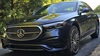
So what is the fix, prevention from this from happening? I seen and heard about cars not having sun blind at all, imagine the glass shatter in the cabin, scary to think about it. tesla also have a very large panoramic sunroof, most of the roof is made of glass. Is this a time bomb? Why haven't manufacturers figured out something yet?
I have had cars with Panoramic roofs since 2021, including my prior 2022 E450 All-Terrain Wagon, and never had this happen to me, in a combined 100K+ driven miles. So I am wondering under what conditions does this event get triggered.
I have had cars with Panoramic roofs since 2021, including my prior 2022 E450 All-Terrain Wagon, and never had this happen to me, in a combined 100K+ driven miles. So I am wondering under what conditions does this event get triggered.
Every single one of my Panoramic roofs, have had 3M Crystalline film added to them. Never had a problem. Of course not even a bit of UV rays, enter the passenger cabin, while cutting out a majority of the heat.
I'm not convinced that tinted sun roofs are any more prone to break without an impact than non-tinted. The tint would at least help contain the glass if it were to break. I wonder how many roofs have shattered over the years that were not struck at some point. Its possible that an impact can cause a weak spot that fails weeks or more later. Of all the roof explosions that has happened over the years, I'm willing to bet that some portion of them were due to some type of impact and either immediately broke or broke some time later. Another portion likely broke from poor design, manufacturing defects, or inproper installation. What percentage of each cause is anyone's guess. I bet not even the car manufacturers know for sure, but they likely know more than they are willing to say. Its very hard to prove one way or another and it's a risk we all take when driving around in cars with lots of glass. I wonder if there are any documented cases of serious injuries or death from a roof shattering.
Every single one of my Panoramic roofs, have had 3M Crystalline film added to them. Never had a problem. Of course not even a bit of UV rays, enter the passenger cabin, while cutting out a majority of the heat.
Quote:
Originally Posted by L1Wolf
I'm not convinced that tinted sun roofs are any more prone to break without an impact than non-tinted. The tint would at least help contain the glass if it were to break. I wonder how many roofs have shattered over the years that were not struck at some point. Its possible that an impact can cause a weak spot that fails weeks or more later. Of all the roof explosions that has happened over the years, I'm willing to bet that some portion of them were due to some type of impact and either immediately broke or broke some time later. Another portion likely broke from poor design, manufacturing defects, or inproper installation. What percentage of each cause is anyone's guess. I bet not even the car manufacturers know for sure, but they likely know more than they are willing to say. Its very hard to prove one way or another and it's a risk we all take when driving around in cars with lots of glass. I wonder if there are any documented cases of serious injuries or death from a roof shattering.
To be honest, me neither. I am just sharing what I found.
Their argument was that tint traps heat which is strange.
Not to argue the point, but any kind of black absorbs heat. Go out on a hot summer day and check the temperatures of a dark tinted rear window as opposed to the lighter tinted front windows.
Not to argue the point, but any kind of black absorbs heat. Go out on a hot summer day and check the temperatures of a dark tinted rear window as opposed to the lighter tinted front windows.
Well, that is physics right? White being the opposite reflects light.
Not to argue the point, but any kind of black absorbs heat. Go out on a hot summer day and check the temperatures of a dark tinted rear window as opposed to the lighter tinted front windows.
To clarify, mine (3M Crystalline 70 film, with around 200 layers in it while being thinner than a post it note) are not dark tinted. My film (fitted on every glass surface of the car, including the Pano roof) is nearly transparent, and unless you are a keen/expert observer, you would not even know that the car has film on it.
What my film does, is to cut out 100% of the UV from entering the passenger cabin. It also prevents 97% of the Infrared (the heat we feel) from entering the cabin. It also does not interfere with the electronic signals (cellphone etc), since it does not have any metal content in it.
I just drove into Phoenix, AZ, and after a day of the car sitting in 100+ degree temps, it is shockingly mild inside the car, when I get back to it. Goes counter to the theory of needing extremely dark tinted glass for cutting out heat.
To clarify, mine (3M Crystalline 70 film, with around 200 layers in it while being thinner than a post it note) are not dark tinted. My film (fitted on every glass surface of the car, including the Pano roof) is nearly transparent, and unless you are a keen/expert observer, you would not even know that the car has film on it.
What my film does, is to cut out 100% of the UV from entering the passenger cabin. It also prevents 97% of the Infrared (the heat we feel) from entering the cabin. It also does not interfere with the electronic signals (cellphone etc), since it does not have any metal content in it.
I just drove into Phoenix, AZ, and after a day of the car sitting in 100+ degree temps, it is shockingly mild inside the car, when I get back to it. Goes counter to the theory of needing extremely dark tinted glass for cutting out heat.
Dyed films is what required very dark tints, ceramic (forgot what the other material is that is one tier above, was it metalized, carbon?) does the job with minimal darkness.
What my film does, is to cut out 100% of the UV from entering the passenger cabin. It also prevents 97% of the Infrared (the heat we feel) from entering the cabin.
just a minor point here: we feel heat from visible light, too, so the best metric for tint is TSER, not just IRER. Crystalline 70 and 15 both reject about 66% of IR energy, but the total solar energy rejection of the 15 is 64%, vs 51% for the 70. Good IR rejection is still the most important thing, but going darker does make the car cooler.
just a minor point here: we feel heat from visible light, too, so the best metric for tint is TSER, not just IRER. Crystalline 70 and 15 both reject about 66% of IR energy, but the total solar energy rejection of the 15 is 64%, vs 51% for the 70. Good IR rejection is still the most important thing, but going darker does make the car cooler.
I agree that the TSER of the near-pitch-black CR15 is 64%, while the transparent CR70, is 51%. The 13% difference in TSER, is not that drastic, while the light that the films let in, is drastically different. I was willing to take that minor hit, for a near transparent film.
The Infra-Red (IR) rejection on the other hand, is near identical between the 2 films, at 98% and 97%. And the IR energy rejection is also near identical at 65%/66%. To me, this is the most telling aspect.
During the recent nearly 1500 mile drive into Arizona, through Nevada etc., the car was cool as a cucumber, while returning over 25.4mpg (with the top-box heavily altering the Coeff.of drag) and loaded to the gills with heavy stuff, and my 2 German Shepherds in their crates in the rear hatch area of the car.
I agree that the TSER of the near-pitch-black CR15 is 64%, while the transparent CR70, is 51%. The 13% difference in TSER, is not that drastic, while the light that the films let in, is drastically different. I was willing to take that minor hit, for a near transparent film.
The Infra-Red (IR) rejection on the other hand, is near identical between the 2 films, at 98% and 97%. And the IR energy rejection is also near identical at 65%/66%. To me, this is the most telling aspect.
During the recent nearly 1500 mile drive into Arizona, through Nevada etc., the car was cool as a cucumber, while returning over 25.4mpg (with the top-box heavily altering the Coeff.of drag) and loaded to the gills with heavy stuff, and my 2 German Shepherds in their crates in the rear hatch area of the car.
That’s a beautiful wagon.
We just completed a trip through the interior of British Columbia and couldn’t believe the gas mileage. It was very impressive.
The car is very comfortable for long trips.
I agree that the TSER of the near-pitch-black CR15 is 64%, while the transparent CR70, is 51%. The 13% difference in TSER, is not that drastic, while the light that the films let in, is drastically different. I was willing to take that minor hit, for a near transparent film.
The Infra-Red (IR) rejection on the other hand, is near identical between the 2 films, at 98% and 97%. And the IR energy rejection is also near identical at 65%/66%. To me, this is the most telling aspect.
During the recent nearly 1500 mile drive into Arizona, through Nevada etc., the car was cool as a cucumber, while returning over 25.4mpg (with the top-box heavily altering the Coeff.of drag) and loaded to the gills with heavy stuff, and my 2 German Shepherds in their crates in the rear hatch area of the car.
That’s a beautiful wagon.
We just completed a trip through the interior of British Columbia and couldn’t believe the gas mileage. It was very impressive.
The car is very comfortable for long trips.
nice!
Mostly highway? What is the duration that you coast with the engine off? You could see that in the trip computer with the blue leaf (if I recalled correctly).
It’s low mountain so there is a lot of coasting going down. I received better gas mileage than what I was highway rated at. Highway rating is 6.1litres per 100 kilometres and I was getting 5.8. That was over 8 hours of driving. I do most of my trips and they are 11 hours straight and I get 7.4 but wind is a big factor.
Adaptive cruise usually cuts out for over an hour at a time as there is very little traffic.
very frustrating.
It’s low mountain so there is a lot of coasting going down. I received better gas mileage than what I was highway rated at. Highway rating is 6.1litres per 100 kilometres and I was getting 5.8. That was over 8 hours of driving. I do most of my trips and they are 11 hours straight and I get 7.4 but wind is a big factor.
Adaptive cruise usually cuts out for over an hour at a time as there is very little traffic.
very frustrating.
It’s low mountain so there is a lot of coasting going down. I received better gas mileage than what I was highway rated at. Highway rating is 6.1litres per 100 kilometres and I was getting 5.8. That was over 8 hours of driving. I do most of my trips and they are 11 hours straight and I get 7.4 but wind is a big factor.
Adaptive cruise usually cuts out for over an hour at a time as there is very little traffic.
very frustrating.
Im not sure what you mean by "cuts out". Are you saying cause cancels? That is not my experience. I've done several long trips and never had it cancel due to no traffic around me. Adaptive cruise just reduces the speed from the set speed if there is a vehicle in front going below your set speed. If nobody is in front, it works like any other cruise control when it comes to speed.
Our car was four months old and the rear portion of the panoramic sunroof exploded.
A third party looked at the roof and said it wasn’t a rock, so did insurance. Mercedes Benz Canada will not warranty their product.
Get affidavits from your two experts and take it to small claims court. No lawyers allowed and you will win. Most probably settle before court.
Im not sure what you mean by "cuts out". Are you saying cause cancels? That is not my experience. I've done several long trips and never had it cancel due to no traffic around me. Adaptive cruise just reduces the speed from the set speed if there is a vehicle in front going below your set speed. If nobody is in front, it works like any other cruise control when it comes to speed.
That was what I thought, it shouldn't cancel itself. One thing I know that cancels itself is the a/c re-circulation mode, it likes to turn off after unknown time.
Thank you. Looks like small claims is the direction I’m heading. $6800 is the total repair including paint damage.
The adaptive radar has to see other traffic, if it doesn’t over a period of time it shuts down. That’s what the dealer told me.
That makes zero sense and not what I have experienced during several trips. I don't think I was driving for more than 15 minutes at a time with no other cars around so I guess it's possible. I wouldn't think the cruise would cancel though. Just the adaptive part, but who knows.
Best of luck to you on the small claims case. Hope you get them to pay!
Pretty rural across Saskatchewan and Manitoba. Divided highway and in the evening I can go awhile without a car. Talked to a Mercedes dealer in Saskatchewan and it’s a common problem especially with their courier vans. You can go along time without traffic.
Slideshow: A one-of-one U.S.-spec Mercedes-Benz SLR McLaren Roadster became even rarer after a factory-backed transformation at McLaren's headquarters.