



Ramifications of installing a lowering module
Thread Starter
Super Member
Joined: Feb 2008
Posts: 888
Likes: 2
From: Paradise (a.k.a. Austin, TX)
'09 S63 AMG
Ramifications of installing a lowering module
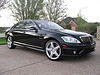
I recently installed 20" Brabus Monoblock VI (2-piece) wheels on my 2008 S550. I'm in 2 minds about whether I need to lower the car or not. I'm looking for expert advice especially from those who have installed the module and then taken their cars in for warranty work.....
There also seem to be a few people on here who think that I should lower the car.
The main issues I have are:
1) You really have 2 options for lowering: (a) Use Brabus/Renntech/Lorinser lowering modules (b) monkey with the control module under the front passenger seat and "trick" the car into sitting lower!
2) What are the potential warranty issues with MB? I could not get a straight answer when I called the MB dealerships - seems like they did not have much knowledge with after-market computer add-on's. A couple of service mgrs. went so far as to tell me that it would VOID the warranty because the diagnostics and readings could get screwed up! Seems like you'd better have one of the best MB techs working at your local dealership who knows everything about the factory computer and air suspension.
3) What mods need to be done to the fender? Does it have to be rolled so that the tire does not hit the fender under heavy loads or when the car is on bumpy surfaces?
All this seems more like too much of a headache and too many unknowns. Not to mention that once you buy the lowering module it's yours - no returning!
Here's the link with pictures of my car
There also seem to be a few people on here who think that I should lower the car.
The main issues I have are:
1) You really have 2 options for lowering: (a) Use Brabus/Renntech/Lorinser lowering modules (b) monkey with the control module under the front passenger seat and "trick" the car into sitting lower!
2) What are the potential warranty issues with MB? I could not get a straight answer when I called the MB dealerships - seems like they did not have much knowledge with after-market computer add-on's. A couple of service mgrs. went so far as to tell me that it would VOID the warranty because the diagnostics and readings could get screwed up! Seems like you'd better have one of the best MB techs working at your local dealership who knows everything about the factory computer and air suspension.
3) What mods need to be done to the fender? Does it have to be rolled so that the tire does not hit the fender under heavy loads or when the car is on bumpy surfaces?
All this seems more like too much of a headache and too many unknowns. Not to mention that once you buy the lowering module it's yours - no returning!
Here's the link with pictures of my car
Last edited by AustinGuy; Apr 22, 2008 at 01:34 PM.

Super Member
Joined: Jan 2008
Posts: 508
Likes: 1
From: california high desert
2003 S500, 03 C240, 03 E320, 03 tahoe
it looks great,it tears the car up
i know ill catch flack on this cause so many people have lowered their cars.no doubt that it looks great!.but it isnt good for the car,the suspension is sitting deeper into its travel or stroke and more prone to bottoming.the suspension pivot points are torqued in a stock ride height configueration and unless you rework that issue,you will wear all the rubber bushings faster in the pivot areas.you will run the lower front fairing into every driveway and parking stop/curb unless you are allways thinking about it.your pics look beautiful,my opinion is to mount taller rubber 35/45 and take up alot of that space that you are concerned with.any normal maintanance that a dealer were to perform on any aspect of the suspension would be looked at through a microscope and if they find fault in the ride height,then you know the answer to the warranty question.

MBWorld Fanatic!


Joined: Nov 2001
Posts: 5,854
Likes: 197
From: Huntington Beach, Ca.
'17 Jaguar XF
i know ill catch flack on this cause so many people have lowered their cars.no doubt that it looks great!.but it isnt good for the car,the suspension is sitting deeper into its travel or stroke and more prone to bottoming.the suspension pivot points are torqued in a stock ride height configueration and unless you rework that issue,you will wear all the rubber bushings faster in the pivot areas.you will run the lower front fairing into every driveway and parking stop/curb unless you are allways thinking about it.your pics look beautiful,my opinion is to mount taller rubber 35/45 and take up alot of that space that you are concerned with.any normal maintanance that a dealer were to perform on any aspect of the suspension would be looked at through a microscope and if they find fault in the ride height,then you know the answer to the warranty question.

Super Member
Joined: Jan 2008
Posts: 508
Likes: 1
From: california high desert
2003 S500, 03 C240, 03 E320, 03 tahoe
MBWorld Fanatic!
Joined: Nov 2001
Posts: 5,854
Likes: 197
From: Huntington Beach, Ca.
'17 Jaguar XF
Super Member
Joined: Jan 2008
Posts: 508
Likes: 1
From: california high desert
2003 S500, 03 C240, 03 E320, 03 tahoe
Thread Starter
Super Member
Joined: Feb 2008
Posts: 888
Likes: 2
From: Paradise (a.k.a. Austin, TX)
'09 S63 AMG
AH1W-COBRA
Thanks a lot for going into detail about that. Frankly, some of what you said sailed right over my head. Uuuummm........ actually, not really - you make a lot of sense .
.
I had this sneaky suspicion that it's not all rosey and honky dory as most "lowering fanatics" make it out to be. You hit the nail right on the head with all the mechanical issues and "unknowns" that I'd potentially run into. I can't imagine how you could lower a car with such complex suspension mechanisms without messing up the components long term (or even short term for that matter).
What's ironic is that the guys who push for lowering the car are usually the ones who want to sell the lowering kits - no surprise there, but...... what's also surprising is that there are a lot of gear heads who know a lot about cars and who don't have problem telling me to lower it. Or maybe they just don't know or realize how detrimental it is to the suspension
Thanks a lot for going into detail about that. Frankly, some of what you said sailed right over my head. Uuuummm........ actually, not really - you make a lot of sense
. I had this sneaky suspicion that it's not all rosey and honky dory as most "lowering fanatics" make it out to be. You hit the nail right on the head with all the mechanical issues and "unknowns" that I'd potentially run into. I can't imagine how you could lower a car with such complex suspension mechanisms without messing up the components long term (or even short term for that matter).
What's ironic is that the guys who push for lowering the car are usually the ones who want to sell the lowering kits - no surprise there, but...... what's also surprising is that there are a lot of gear heads who know a lot about cars and who don't have problem telling me to lower it. Or maybe they just don't know or realize how detrimental it is to the suspension
Trending Topics
Super Member
Joined: Jan 2008
Posts: 508
Likes: 1
From: california high desert
2003 S500, 03 C240, 03 E320, 03 tahoe
AustinGuy
It's true,even seasoned mechs that know how hard lowering will be on their cars do it anyway.it's for the same reasons you are considering it in the first place.That low,lean bad *** look is as hard to resist as your first girlfriend saying yes.your car is magnificent,i can only imagine how well it performs/drives.I have never owned a brand new MB,but it is gonna happen somday.warrantys mean everything on a car like yours and i woulden't risk MB copping an attitude on the car for lowering it.I know tires are expensive but go back to the shop and let them show you the taller sidewall tires next to yours,it will fill the wheel well a little more and give a smoother/quieter ride with only a small sacrafice in handling.
MB World Stories
The Best of Mercedes & AMG

8 Oddball Mercedes Ideas That Actually Made it to Production
Verdad Gallardo
Dubai Tuner Gives the Mercedes G-Class An Entirely New Look
Verdad Gallardo
Six Gift Ideas Your AMG Loving Dad or Grad Will Cherish

7 Craziest Things AMG Gas Ever Built
Verdad Gallardo
New Electric Mercedes-AMG GT 4-Door Coupe Unveiled: 10 Things You Need to Know
Verdad Gallardo
6 Mercedes Models That Did NOT Age Well (But Are Somehow Still Cool)
Verdad Gallardo
Manual Mercedes? 6 Times Sindelfingen Let Drivers Have All The Fun
Verdad Gallardo
Mercedes SLR McLaren 722 S Is Extremely Rare Example Modified by McLaren
Verdad Gallardo
8 Classic Boxy Mercedes Designs That Have Aged Like Fine Wine
Verdad Gallardo
Thread Starter
Super Member
Joined: Feb 2008
Posts: 888
Likes: 2
From: Paradise (a.k.a. Austin, TX)
'09 S63 AMG
AH1W-COBRA
I don't think I can put a larger tire (I mean with a larger aspect ratio) without impacting the speedometer and other components. Going from a 19 to a 20" wheel as in my case is about the most you can go without monkeying with the speed sensing components.
As I understand it, as long as the overall tire diameter does not change you're okay (with revs/min, etc.) but the minute you change to a larger tire that the car was not calibrated for, your speedometer gets thrown off.
I think there's a lot of good stuff about this on tirerack.com
Let me know what you think.
I don't think I can put a larger tire (I mean with a larger aspect ratio) without impacting the speedometer and other components. Going from a 19 to a 20" wheel as in my case is about the most you can go without monkeying with the speed sensing components.
As I understand it, as long as the overall tire diameter does not change you're okay (with revs/min, etc.) but the minute you change to a larger tire that the car was not calibrated for, your speedometer gets thrown off.
I think there's a lot of good stuff about this on tirerack.com
Let me know what you think.
Super Member
Joined: Jan 2008
Posts: 508
Likes: 1
From: california high desert
2003 S500, 03 C240, 03 E320, 03 tahoe
this is a good question
[QUOTE=AustinGuy;2801833]AH1W-COBRA
I don't think I can put a larger tire (I mean with a larger aspect ratio) without impacting the speedometer and other components. Going from a 19 to a 20" wheel as in my case is about the most you can go without monkeying with the speed sensing components.
As I understand it, as long as the overall tire diameter does not change you're okay (with revs/min, etc.) but the minute you change to a larger tire that the car was not calibrated for, your speedometer gets thrown off.
I think there's a lot of good stuff about this on tirerack.com
Let me know what you think.[/QUOTE/]im sure someone knows the answer to speed/distance calibration.im wondering why you could potentially load the tire dimensions into the command nav unit and it would compensate for the changes in tire/rim circumference and calibrate itself to be accurate in navigation.but you cant calibrate the input to the chassis/instrument cluster.it must have somthing to do with the legality of changing the odometer factory specs when it comes to determining how many miles are on the car.warranty/resale/lease options.
I don't think I can put a larger tire (I mean with a larger aspect ratio) without impacting the speedometer and other components. Going from a 19 to a 20" wheel as in my case is about the most you can go without monkeying with the speed sensing components.
As I understand it, as long as the overall tire diameter does not change you're okay (with revs/min, etc.) but the minute you change to a larger tire that the car was not calibrated for, your speedometer gets thrown off.
I think there's a lot of good stuff about this on tirerack.com
Let me know what you think.[/QUOTE/]im sure someone knows the answer to speed/distance calibration.im wondering why you could potentially load the tire dimensions into the command nav unit and it would compensate for the changes in tire/rim circumference and calibrate itself to be accurate in navigation.but you cant calibrate the input to the chassis/instrument cluster.it must have somthing to do with the legality of changing the odometer factory specs when it comes to determining how many miles are on the car.warranty/resale/lease options.

MBWorld Fanatic!

Joined: Mar 2006
Posts: 4,278
Likes: 379
From: San Jose area
'19 E63S sedan
There's more than just the speedometer to consider. ESP, BAS, ECU, TCU, nav and other electronics will be thrown off if the rolling radius of the tire is off significantly. Steering geometry will also be off, which will affect handling, steering feel and tire wear. The idea of a "plus" tire fitment is to go a little wider for grip if you can, replace rubber with metal for response (by using a lower profile tire on a larger wheel) but keeping the rolling diameter/radius of the tire as close to the same as possible, generally within a percent or two at most.
A rough rule of thumb is that each inch bigger wheel goes with one series (10%) lower profile and 10 or 15 mm wider tires. Of course, the extra width has to fit in your wheel wells without major rubbing.
A calculator, like
http://www.canadiandriver.com/tools/...c/tirecalc.htm
will allow you to compare rolling diameters of stock and plus tires.
A rough rule of thumb is that each inch bigger wheel goes with one series (10%) lower profile and 10 or 15 mm wider tires. Of course, the extra width has to fit in your wheel wells without major rubbing.
A calculator, like
http://www.canadiandriver.com/tools/...c/tirecalc.htm
will allow you to compare rolling diameters of stock and plus tires.

Thread Starter
Super Member
Joined: Feb 2008
Posts: 888
Likes: 2
From: Paradise (a.k.a. Austin, TX)
'09 S63 AMG
There's more than just the speedometer to consider. ESP, BAS, ECU, TCU, nav and other electronics will be thrown off if the rolling radius of the tire is off significantly. Steering geometry will also be off, which will affect handling, steering feel and tire wear. The idea of a "plus" tire fitment is to go a little wider for grip if you can, replace rubber with metal for response (by using a lower profile tire on a larger wheel) but keeping the rolling diameter/radius of the tire as close to the same as possible, generally within a percent or two at most.
A rough rule of thumb is that each inch bigger wheel goes with one series (10%) lower profile and 10 or 15 mm wider tires. Of course, the extra width has to fit in your wheel wells without major rubbing.
A calculator, like
http://www.canadiandriver.com/tools/...c/tirecalc.htm
will allow you to compare rolling diameters of stock and plus tires.
A rough rule of thumb is that each inch bigger wheel goes with one series (10%) lower profile and 10 or 15 mm wider tires. Of course, the extra width has to fit in your wheel wells without major rubbing.
A calculator, like
http://www.canadiandriver.com/tools/...c/tirecalc.htm
will allow you to compare rolling diameters of stock and plus tires.

Uuum ... I feel like I know so little about cars now....

Thanks for all that - it really puts things into perspective.


