






Heat Wrapping Intake Tubes - Does Work!! (Supporting Data and Pictures)

Thread Starter
Former Vendor of MBWorld
iTrader: (1)
Joined: May 2008
Posts: 12,139
Likes: 295
From: Houston
2003 W211 E55, 2003 W220 S600

Former Vendor of MBWorld
Joined: Sep 2008
Posts: 1,935
Likes: 5
AMG
+100 , without doing this in closed hood conditions on the go, it doesn't really tell you anything. Simply allowing the engine to cool down, or changing the time from startup when you make the measurement could get you same results. Doing it with engine bay closed, that is the real test.
Thread Starter
Former Vendor of MBWorld
iTrader: (1)
Joined: May 2008
Posts: 12,139
Likes: 295
From: Houston
2003 W211 E55, 2003 W220 S600
+100 , without doing this in closed hood conditions on the go, it doesn't really tell you anything. Simply allowing the engine to cool down, or changing the time from startup when you make the measurement could get you same results. Doing it with engine bay closed, that is the real test.
Do you all share space with motorwerks, I go there a lot.

MBWorld Fanatic!
Joined: Sep 2007
Posts: 7,136
Likes: 5
Corrolla
MB World Stories
The Best of Mercedes & AMG

Manual Mercedes? 6 Times Sindelfingen Let Drivers Have All The Fun
Verdad Gallardo
Mercedes SLR McLaren 722 S Is Extremely Rare Example Modified by McLaren
Verdad Gallardo
8 Classic Boxy Mercedes Designs That Have Aged Like Fine Wine
Verdad Gallardo
Flawlessly Restored Mercedes 190E Evo II Heads to Auction
Verdad Gallardo
Electric Mercedes C-Class Unveiled: 11 Things You Need to Know
Verdad Gallardo
Mercedes EQS Gets A Major Update: Everything You Need to Know
Verdad Gallardo
5 Underrated Mercedes-Benz Models That Don't Get the Love They Deserve
Verdad Gallardo
Mercedes 300D Has Pushed Well Past 1 Million Miles and It Ain't Stopping
Verdad Gallardo
10 Most Reliable Mercedes-Benz Models You Can Buy Used
Verdad Gallardo
MBWorld Fanatic!
Joined: Apr 2006
Posts: 8,137
Likes: 26
From: Maryland
Eurocharged 2004 E500, Eurocharged ECU/TCU 2005 SL600, 2010 Caddy SwaggerWagon
Devil's advocate here.....
What about the thought that at W.O.T, the air passing through the intake tubes is moving at such a velocity, that the couple of degrees that you gain at idle, have no effect on performance when you're running flat out?
Discuss.
What about the thought that at W.O.T, the air passing through the intake tubes is moving at such a velocity, that the couple of degrees that you gain at idle, have no effect on performance when you're running flat out?
Discuss.

MBWorld Fanatic!
Joined: Oct 2006
Posts: 4,856
Likes: 4
02 C32 AMG
this can help keep temps down at the track if you are not moving with your car on i would imagine while in the staging lanes.
a data logger is really needed to confirm all of this with the hood down and under driving conditions.
MBWorld Fanatic!
Joined: Jun 2007
Posts: 2,949
Likes: 0
From: Philadelphia, PA
2008 A8L, 2002 996TT X50, 2009 X5
the insulation would help prevent the heat transfer from the engine bay to the plastic air intake tubes or boxes prior to WOT. So at WOT when air rushes in, it will not pick up as heat much when traveling through the tubes and boxes as it would have before when not insulated/heat wrapped.
this can help keep temps down at the track if you are not moving with your car on i would imagine while in the staging lanes.
a data logger is really needed to confirm all of this with the hood down and under driving conditions.
this can help keep temps down at the track if you are not moving with your car on i would imagine while in the staging lanes.
a data logger is really needed to confirm all of this with the hood down and under driving conditions.
The thing I wonder about, though - once everything in the engine bay gets up to temp equilibrium... will the insulating wrap slow down how quickly the tubes cool off? Logically, it would seem to... but IDK. Datalog FTW!

MBWorld Fanatic!
Joined: Oct 2006
Posts: 4,856
Likes: 4
02 C32 AMG
the exhaust wraps act as a barrier for heat to transfer from the engine bay to the intake, but does it also trap heat in the intake once there and preventing its dissipation? after all, this is the purpose of wrapping the exhaust with exhaust wrap, is it not?
also, perhaps the insulation works so well, the tubes and boxes don't get that hot and the heat to be lost is little to negligible?
this, again, would be something interesting to monitor with a data logger. i'll hopefully be getting mine soon and can do some tests why i buy material. JustPete already has his intake wrapped and will be getting data logging too, so he might do some tests and beat me to it!

Senior Member
Joined: Jul 2009
Posts: 475
Likes: 0
From: Latitude 26.1695, Longitude -80.0997
my wife wild, but she loves every minute of it.
If you are at speed -- and WOT -- I suspect you are right. The air moving through the tubes would be very close to ambient, with little time for heat transfer. The effects would be more helpful at lower speeds, at less than WOT.


Senior Member
Joined: Feb 2007
Posts: 463
Likes: 8
From: South Florida
2014 E63, Cobra replica, 68 Camaro, 66 Chevy II SS, Z4 BMW, Honda Element, Birel 125cc Shifter Kart.
I've used wraps of one kind or another on intake components for decades and found the ones with a foil barrier on one side work much better than plain wrap. The plain wrap was originally used on exhaust headers and works OK but not nearly as well as the foil backed shield.
MBWorld Fanatic!
Joined: Jun 2009
Posts: 1,693
Likes: 9
From: Houston, TX
2006 E55, 2012 Jeep SRT, 2008 G37s 6MT (The Mrs.), 2005 Explorer
Might not have much of an effect at WOT but might be decent while driving around town or when in traffic and you decide to use the beast to get away from traffic.

Anyone run Redline's Water Wetter or a coolant additive to make the intercooler more effective?

MBWorld Fanatic!
Joined: Dec 2006
Posts: 4,949
Likes: 39
From: Clifton, NJ
96 and 08 911 turbos
If the tubes were metal, I could possibly see this being worth it.
Given that the tubes are pretty short, and plastic, a minor temp change is simply not going to have much, if any effect on power production.
Given that the tubes are pretty short, and plastic, a minor temp change is simply not going to have much, if any effect on power production.

Senior Member
Joined: Apr 2009
Posts: 336
Likes: 0
From: Salt Lake City, UT
2002 BMW M5, 1992 AWD DSM, 1988 Yamaha FZR1000
I run water wetter, and didn't notice much of a difference in coolant temps. Maybe one notch lower every once in a while, on a hot day. I don't have a datalogger for the E55, though.
Senior Member
Joined: Apr 2009
Posts: 336
Likes: 0
From: Salt Lake City, UT
2002 BMW M5, 1992 AWD DSM, 1988 Yamaha FZR1000
There are a couple options from DEI...
Cool-Tape (which would be a lot better than the velcro thing they offer, since our tubes aren't perfectly rounded)- http://www.designengineering.com/pro...p&pid=30&tid=1
The aforementioned air intake velcro tube: http://www.designengineering.com/pro...p&pid=33&tid=5
Reflect-a-Cool cut-to-fit heat shields: http://www.summitracing.com/parts/DE...2/?image=large
Another kind of cut-to-fit heat barrier tape (looks like the opposite of exhaust header tape): http://www.summitracing.com/parts/TAY-2531/?image=large
Cool-Tape (which would be a lot better than the velcro thing they offer, since our tubes aren't perfectly rounded)- http://www.designengineering.com/pro...p&pid=30&tid=1
The aforementioned air intake velcro tube: http://www.designengineering.com/pro...p&pid=33&tid=5
Reflect-a-Cool cut-to-fit heat shields: http://www.summitracing.com/parts/DE...2/?image=large
Another kind of cut-to-fit heat barrier tape (looks like the opposite of exhaust header tape): http://www.summitracing.com/parts/TAY-2531/?image=large
Last edited by Nait Sirhc; Aug 14, 2009 at 11:43 AM.

Member
Joined: Nov 2008
Posts: 132
Likes: 1
From: Columbus OH
A4, M3, 996, E55
I've used wraps of one kind or another on intake components for decades and found the ones with a foil barrier on one side work much better than plain wrap. The plain wrap was originally used on exhaust headers and works OK but not nearly as well as the foil backed shield.
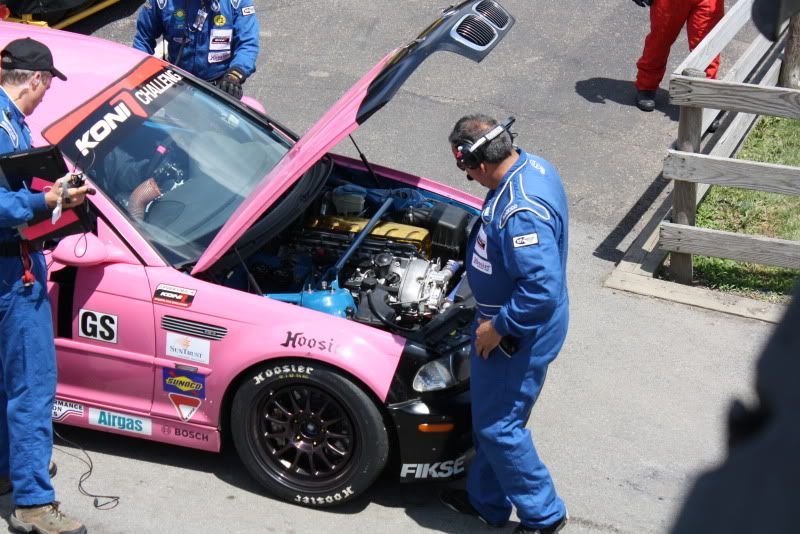
I was at the Grand-Am races recently and was amazed at some of the components that the teams were wrapping in the the gold tape to keep heat out. I personally have portions of my cold air intake in my 996 wrapped in this stuff as it tends to heat soak durring long sessions at the track.
http://www.designengineering.com/pro...sp?m=sp&pid=75
picture from the races afew weeks back as exmaple. Many of the teams had the entire intake tract including manifold wrapped.

MBWorld Fanatic!
Joined: Oct 2006
Posts: 4,856
Likes: 4
02 C32 AMG
To add to this...the gold tape is the most effective stuff on the market. If you're going to go through the effort do it right the first time even it it costs a bit more.
I was at the Grand-Am races recently and was amazed at some of the components that the teams were wrapping in the the gold tape to keep heat out. I personally have portions of my cold air intake in my 996 wrapped in this stuff as it tends to heat soak durring long sessions at the track.
http://www.designengineering.com/pro...sp?m=sp&pid=75
picture from the races afew weeks back as exmaple. Many of the teams had the entire intake tract including manifold wrapped.
I was at the Grand-Am races recently and was amazed at some of the components that the teams were wrapping in the the gold tape to keep heat out. I personally have portions of my cold air intake in my 996 wrapped in this stuff as it tends to heat soak durring long sessions at the track.
http://www.designengineering.com/pro...sp?m=sp&pid=75
picture from the races afew weeks back as exmaple. Many of the teams had the entire intake tract including manifold wrapped.
http://www.designengineering.com/pro...p&pid=30&tid=1
http://www.summitracing.com/parts/TH...5/?image=large
...say they can handle up to 1500-2000F? The first link is "1 mil aluminized material bonded to a light weight, woven fiberglass" and the second link is "aluminized Heat Barriers are made up of woven silica with a flexible aluminized finish".
And what makes all of these better to use to wrap than exhaust wrap? Is it that while they reflect heat and prevent the heat from being taken up by the intake, they do not prevent the intake from dissipating the heat like the exhaust wrap might do?

MBWorld Fanatic!
Joined: May 2008
Posts: 1,615
Likes: 0
From: Maryland
SL55 AMG
on that link, it says the gold reflective material is capable of withstanding 850F. So if this is the best out there, why do other such as these:
http://www.designengineering.com/pro...p&pid=30&tid=1
http://www.summitracing.com/parts/TH...5/?image=large
...say they can handle up to 1500-2000F? The first link is "1 mil aluminized material bonded to a light weight, woven fiberglass" and the second link is "aluminized Heat Barriers are made up of woven silica with a flexible aluminized finish".
And what makes all of these better to use to wrap than exhaust wrap? Is it that while they reflect heat and prevent the heat from being taken up by the intake, they do not prevent the intake from dissipating the heat like the exhaust wrap might do?
http://www.designengineering.com/pro...p&pid=30&tid=1
http://www.summitracing.com/parts/TH...5/?image=large
...say they can handle up to 1500-2000F? The first link is "1 mil aluminized material bonded to a light weight, woven fiberglass" and the second link is "aluminized Heat Barriers are made up of woven silica with a flexible aluminized finish".
And what makes all of these better to use to wrap than exhaust wrap? Is it that while they reflect heat and prevent the heat from being taken up by the intake, they do not prevent the intake from dissipating the heat like the exhaust wrap might do?
good questions...the gold stuff says 850 deg and the aluminized woven says 1500 deg and the other link posted 2000 deg!!! I've seen the gold stuff from Grand Am cars quite often, both DP and GT cars use it...
I'm subscribed to this thread I think there is a best solution out there; we just need to find out what it is!
Member
Joined: Nov 2008
Posts: 132
Likes: 1
From: Columbus OH
A4, M3, 996, E55
on that link, it says the gold reflective material is capable of withstanding 850F. So if this is the best out there, why do other such as these:
http://www.designengineering.com/pro...p&pid=30&tid=1
http://www.summitracing.com/parts/TH...5/?image=large
...say they can handle up to 1500-2000F? The first link is "1 mil aluminized material bonded to a light weight, woven fiberglass" and the second link is "aluminized Heat Barriers are made up of woven silica with a flexible aluminized finish".
And what makes all of these better to use to wrap than exhaust wrap? Is it that while they reflect heat and prevent the heat from being taken up by the intake, they do not prevent the intake from dissipating the heat like the exhaust wrap might do?
http://www.designengineering.com/pro...p&pid=30&tid=1
http://www.summitracing.com/parts/TH...5/?image=large
...say they can handle up to 1500-2000F? The first link is "1 mil aluminized material bonded to a light weight, woven fiberglass" and the second link is "aluminized Heat Barriers are made up of woven silica with a flexible aluminized finish".
And what makes all of these better to use to wrap than exhaust wrap? Is it that while they reflect heat and prevent the heat from being taken up by the intake, they do not prevent the intake from dissipating the heat like the exhaust wrap might do?
What you're looking for is how effective the material is at REFLECTING heat away from the item you're trying to protect against heat soak. I find it funny they don't publish a number stating exactly how much heat any of the chrome or wraps will keep out...just that they won't fall apart at XXX temp. They Do however publish the gold will reflect 80% of all radiant heat.
Header wrap is actually meant to keep heat IN the header and move the heat release further downstream in the exhaust system. While it does insulate some...it's still going to heat soak itself eventually as it doesn't have the reflective properties like the chrome or gold. That's why the intake sleeves are made of the chrome. It's the best balance of reflective properties without a huge price. The gold isn't cheap but it does the best job of reflecting heat away from the surface that it's on of any of them.

Senior Member
Joined: Apr 2009
Posts: 453
Likes: 0
CLS55 AMG 030
Heat rating isn't really the concern here. They're basically stating the tape or wrap won't come apart at those temps.
What you're looking for is how effective the material is at REFLECTING heat away from the item you're trying to protect against heat soak. I find it funny they don't publish a number stating exactly how much heat any of the chrome or wraps will keep out...just that they won't fall apart at XXX temp. They Do however publish the gold will reflect 80% of all radiant heat.
Header wrap is actually meant to keep heat IN the header and move the heat release further downstream in the exhaust system. While it does insulate some...it's still going to heat soak itself eventually as it doesn't have the reflective properties like the chrome or gold. That's why the intake sleeves are made of the chrome. It's the best balance of reflective properties without a huge price. The gold isn't cheap but it does the best job of reflecting heat away from the surface that it's on of any of them.
What you're looking for is how effective the material is at REFLECTING heat away from the item you're trying to protect against heat soak. I find it funny they don't publish a number stating exactly how much heat any of the chrome or wraps will keep out...just that they won't fall apart at XXX temp. They Do however publish the gold will reflect 80% of all radiant heat.
Header wrap is actually meant to keep heat IN the header and move the heat release further downstream in the exhaust system. While it does insulate some...it's still going to heat soak itself eventually as it doesn't have the reflective properties like the chrome or gold. That's why the intake sleeves are made of the chrome. It's the best balance of reflective properties without a huge price. The gold isn't cheap but it does the best job of reflecting heat away from the surface that it's on of any of them.
I'd bet my life the difference for a long duration is less than 2 degrees while looking 10x better.
Now ... having said that ... you wanna do some racing ... wet the wraps. You lose bigtime.

Member
Joined: Nov 2008
Posts: 132
Likes: 1
From: Columbus OH
A4, M3, 996, E55
That's really the idea ... just insulating the tubes from the heat. The cool air running through them will maintain the reduction by acting as a force opposite the insulation barrier.
I'd bet my life the difference for a long duration is less than 2 degrees while looking 10x better.
Now ... having said that ... you wanna do some racing ... wet the wraps. You lose bigtime.
I'd bet my life the difference for a long duration is less than 2 degrees while looking 10x better.
Now ... having said that ... you wanna do some racing ... wet the wraps. You lose bigtime.
Andy


