


Newbie
AMG-Jerry,
Thanks for your sharing of information on this project. I too have a supercharged M112 in my SRT6 and was concerned about the IATs as I track the car occasionally.
Up to now the only modifications I've made to the car are brakes, brake fluid, rotors and tires. Everything else is cosmetic.
I have already obtained a Johnson CM30 pump and will probably do the same modification early next year before my first track outing.
Thanks again!
Thanks for your sharing of information on this project. I too have a supercharged M112 in my SRT6 and was concerned about the IATs as I track the car occasionally.
Up to now the only modifications I've made to the car are brakes, brake fluid, rotors and tires. Everything else is cosmetic.
I have already obtained a Johnson CM30 pump and will probably do the same modification early next year before my first track outing.
Thanks again!

Senior Member
Hey Jerry,
I got the CarChip and immediately jumped on the highway to see the IAT when S/C shuts off.
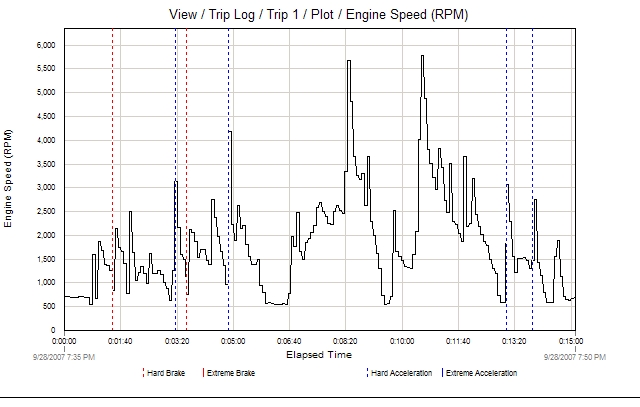
Very likely a cooling problem. Please, see attached picture. Half of the time I drove on residential streets not pushing the car too hard. The two peaks you see, where the IAT goes above 200F are when I accelerate from 60 to 120mph. This is where I lost the S/C for a minute or so. I posted the RMP graph too - strong correlation between the high RPMs and IAT.
It seems the IAT is always high - around 175F. Note the dip at the beginning of the graph, may not be important (?). The weather is cool and my car is stock. The I/C pump was replaced less than one year ago (way less than 10k miles driven since).
What do you think? Pump again, or something else now...
I got the CarChip and immediately jumped on the highway to see the IAT when S/C shuts off.
Very likely a cooling problem. Please, see attached picture. Half of the time I drove on residential streets not pushing the car too hard. The two peaks you see, where the IAT goes above 200F are when I accelerate from 60 to 120mph. This is where I lost the S/C for a minute or so. I posted the RMP graph too - strong correlation between the high RPMs and IAT.
It seems the IAT is always high - around 175F. Note the dip at the beginning of the graph, may not be important (?). The weather is cool and my car is stock. The I/C pump was replaced less than one year ago (way less than 10k miles driven since).
What do you think? Pump again, or something else now...


Senior Member
Quote:
Very likely a cooling problem. Please, see attached picture. Half of the time I drove on residential streets not pushing the car too hard. The two peaks you see, where the IAT goes above 200F are when I accelerate from 60 to 120mph. This is where I lost the S/C for a minute or so.
In general though, I think the IAT is high - around 175F most of the time. Note the dip at the beginning of the graph, may not be important (?). The weather is cool and my car is stock. My I/C pump was replaced less than one year ago (way less than 10 miles driven since).
What do you think?
Geezus christ change that pump! When I run 1/4 runs fromOriginally Posted by gkstar
Hey Jerry, I got the CarChip and immediately jumped on the highway to see my IAT when S/C shuts off.Very likely a cooling problem. Please, see attached picture. Half of the time I drove on residential streets not pushing the car too hard. The two peaks you see, where the IAT goes above 200F are when I accelerate from 60 to 120mph. This is where I lost the S/C for a minute or so.
In general though, I think the IAT is high - around 175F most of the time. Note the dip at the beginning of the graph, may not be important (?). The weather is cool and my car is stock. My I/C pump was replaced less than one year ago (way less than 10 miles driven since).
What do you think?
0mph to 110mph I don't even touch 200F.
Senior Member
Quote:
I got the CarChip and immediately jumped on the highway to see the IAT when S/C shuts off.
Very likely a cooling problem. Please, see attached picture. Half of the time I drove on residential streets not pushing the car too hard. The two peaks you see, where the IAT goes above 200F are when I accelerate from 60 to 120mph. This is where I lost the S/C for a minute or so. I posted the RMP graph too - strong correlation between the high RPMs and IAT.
It seems the IAT is always high - around 175F. Note the dip at the beginning of the graph, may not be important (?). The weather is cool and my car is stock. The I/C pump was replaced less than one year ago (way less than 10k miles driven since).
What do you think? Pump again, or something else now...
Hmmm... here is the boost graph as well. Did a search and see that stock C32 boost should be around 17 psi or so. The graph, correlated to the previous two I posted above, registered 29 psi twice and up to 24 psi several time:Originally Posted by gkstar
Hey Jerry, I got the CarChip and immediately jumped on the highway to see the IAT when S/C shuts off.
Very likely a cooling problem. Please, see attached picture. Half of the time I drove on residential streets not pushing the car too hard. The two peaks you see, where the IAT goes above 200F are when I accelerate from 60 to 120mph. This is where I lost the S/C for a minute or so. I posted the RMP graph too - strong correlation between the high RPMs and IAT.
It seems the IAT is always high - around 175F. Note the dip at the beginning of the graph, may not be important (?). The weather is cool and my car is stock. The I/C pump was replaced less than one year ago (way less than 10k miles driven since).
What do you think? Pump again, or something else now...
Revision: I found a recent post from Jerry where he posts similar data - the Intake Manifold pressure on the graph is apparently is not the same as Boost.


SPONSOR
Quote:
Originally Posted by gkstar
Hmmm... here is the boost graph as well. Did a search and see that stock C32 boost should be around 17 psi or so. The graph, correlated to the previous to I posted above, registered 29 psi twice and up to 24 psi several time:
stock C32 is 14.5psi...

sales@eurocharged.com
SPONSOR
close
Today
- Join DateAug 2006
- LocationHouston
- Posts:4,909
-
iTrader Positive Feedback0
-
iTrader Feedback Score(0)
- Vehicle(s) I driveC63S
-
Likes:169
-
Liked:130 Times in 93 Posts
Quote:
Revision: I found a recent post from Jerry where he posts similar data - the Intake Manifold pressure on the graph is apparently is not the same as Boost.
Originally Posted by gkstar
Hmmm... here is the boost graph as well. Did a search and see that stock C32 boost should be around 17 psi or so. The graph, correlated to the previous two I posted above, registered 29 psi twice and up to 24 psi several time:Revision: I found a recent post from Jerry where he posts similar data - the Intake Manifold pressure on the graph is apparently is not the same as Boost.
Subract barometric / atmospheric pressure from the data and that will give you your boost level.
Your IAT's are way too high. Something is not right and it is most likely the pump.
sales@eurocharged.com
SPONSOR
close
Today
- Join DateAug 2006
- LocationHouston
- Posts:4,909
-
iTrader Positive Feedback0
-
iTrader Feedback Score(0)
- Vehicle(s) I driveC63S
-
Likes:169
-
Liked:130 Times in 93 Posts
I'm now debating if I should remove the ported heads and try a set of stock heads to see the difference in power.
The car is running good, but I still think it's down on power.
The car is running good, but I still think it's down on power.

MBWorld Fanatic!
Quote:
I'm still trying to figure out a way to get more power from the car as well. Some have suggested that a vacuum pump might be the answer, so I PMed a few people who have experience with these to see if it would be a good choice. More info here http://www.dragstuff.com/techarticles/vacuum-pumps.html
Now that I have seperated the PCV system, I can see how much oil is coming through. For some time, I only vented the two smalled PCV line off each valve cover. Now, I have all 3 vented and there is a good amount of oil in the system.
I'm going to measure the vacuum later today to see if I need this.
I ran this setup on my car for over a year. I had all three lines plumbed into a catch can with a filter for venting. I would empty it at every oil change and get about 6fl oz or so of moisture, oil, and stuff. I would say that our cars consume more than this as with the PCV in place there is a vacuum source to help pull the oil out as well. With venting only the crankcase pressures are what can push the oil out. With the venting system the crankcase sees no vacuum. Originally Posted by AMG-Jerry
Yeah...I don't want to speak for him, but he is working on a resolution now.I'm still trying to figure out a way to get more power from the car as well. Some have suggested that a vacuum pump might be the answer, so I PMed a few people who have experience with these to see if it would be a good choice. More info here http://www.dragstuff.com/techarticles/vacuum-pumps.html
Now that I have seperated the PCV system, I can see how much oil is coming through. For some time, I only vented the two smalled PCV line off each valve cover. Now, I have all 3 vented and there is a good amount of oil in the system.
I'm going to measure the vacuum later today to see if I need this.
I have since installed a PCV valve, and a check valve to get some vaccumm assisted evacuation. Some very good MB techs have recomended against venting my system as the "gunk" will build up much easier on the valvetrain and the oil will break down and be less effective due to the gases and such contaminating the oil. I ran the two small lines to a PCV valve and installed at the TB location for vacuum. The large line has a check valve with the flow heading away from the motor. When on boost the PCV allows some vacuum to pull gasses and such from the crankcase. The large line check valve remains closed wich allows cranckase vacuum to build. While running the oil fill cap is hard to remove due to vacuum. Under boost the PCV valve shuts to prevent boosting the crankcase. The large line check valve flows away from the motor so it acts as a vented system under boost, and a vacuum system under regular non boost driving.
The downside to this is that CC gases and such are heading back into the intake mani. What I've found though, is that the small L and R side lines seem to have a baffle design of some sort and they don't let much "crap" get by. The larger single line is the one that seems to dump the most "crap" and it is the line intended for evacuation under "load" conditions. Because this line is now vented and the motor only pulls from the small lines I still think I've reduced a good amount. Wow, what a rant, good coffe today. Lastly, the vented system eventually made my engine bay filthy and smelly. Even the K&N breather filter will let some mist by.....
MB World Stories
The Best of Mercedes & AMG
Explore

Manual Mercedes? 6 Times Sindelfingen Let Drivers Have All The Fun
Verdad Gallardo
Mercedes SLR McLaren 722 S Is Extremely Rare Example Modified by McLaren
Verdad Gallardo
8 Classic Boxy Mercedes Designs That Have Aged Like Fine Wine
Verdad Gallardo
Flawlessly Restored Mercedes 190E Evo II Heads to Auction
Verdad Gallardo
Electric Mercedes C-Class Unveiled: 11 Things You Need to Know
Verdad Gallardo
Mercedes EQS Gets A Major Update: Everything You Need to Know
Verdad Gallardo
5 Underrated Mercedes-Benz Models That Don't Get the Love They Deserve
Verdad Gallardo
Mercedes 300D Has Pushed Well Past 1 Million Miles and It Ain't Stopping
Verdad Gallardo
10 Most Reliable Mercedes-Benz Models You Can Buy Used
Verdad Gallardo
sales@eurocharged.com
SPONSOR
close
Today
- Join DateAug 2006
- LocationHouston
- Posts:4,909
-
iTrader Positive Feedback0
-
iTrader Feedback Score(0)
- Vehicle(s) I driveC63S
-
Likes:169
-
Liked:130 Times in 93 Posts
Quote:
I have since installed a PCV valve, and a check valve to get some vaccumm assisted evacuation. Some very good MB techs have recomended against venting my system as the "gunk" will build up much easier on the valvetrain and the oil will break down and be less effective due to the gases and such contaminating the oil. I ran the two small lines to a PCV valve and installed at the TB location for vacuum. The large line has a check valve with the flow heading away from the motor. When on boost the PCV allows some vacuum to pull gasses and such from the crankcase. The large line check valve remains closed wich allows cranckase vacuum to build. While running the oil fill cap is hard to remove due to vacuum. Under boost the PCV valve shuts to prevent boosting the crankcase. The large line check valve flows away from the motor so it acts as a vented system under boost, and a vacuum system under regular non boost driving.
The downside to this is that CC gases and such are heading back into the intake mani. What I've found though, is that the small L and R side lines seem to have a baffle design of some sort and they don't let much "crap" get by. The larger single line is the one that seems to dump the most "crap" and it is the line intended for evacuation under "load" conditions. Because this line is now vented and the motor only pulls from the small lines I still think I've reduced a good amount. Wow, what a rant, good coffe today. Lastly, the vented system eventually made my engine bay filthy and smelly. Even the K&N breather filter will let some mist by.....
Originally Posted by NitrogenBalance
I ran this setup on my car for over a year. I had all three lines plumbed into a catch can with a filter for venting. I would empty it at every oil change and get about 6fl oz or so of moisture, oil, and stuff. I would say that our cars consume more than this as with the PCV in place there is a vacuum source to help pull the oil out as well. With venting only the crankcase pressures are what can push the oil out. With the venting system the crankcase sees no vacuum. I have since installed a PCV valve, and a check valve to get some vaccumm assisted evacuation. Some very good MB techs have recomended against venting my system as the "gunk" will build up much easier on the valvetrain and the oil will break down and be less effective due to the gases and such contaminating the oil. I ran the two small lines to a PCV valve and installed at the TB location for vacuum. The large line has a check valve with the flow heading away from the motor. When on boost the PCV allows some vacuum to pull gasses and such from the crankcase. The large line check valve remains closed wich allows cranckase vacuum to build. While running the oil fill cap is hard to remove due to vacuum. Under boost the PCV valve shuts to prevent boosting the crankcase. The large line check valve flows away from the motor so it acts as a vented system under boost, and a vacuum system under regular non boost driving.
The downside to this is that CC gases and such are heading back into the intake mani. What I've found though, is that the small L and R side lines seem to have a baffle design of some sort and they don't let much "crap" get by. The larger single line is the one that seems to dump the most "crap" and it is the line intended for evacuation under "load" conditions. Because this line is now vented and the motor only pulls from the small lines I still think I've reduced a good amount. Wow, what a rant, good coffe today. Lastly, the vented system eventually made my engine bay filthy and smelly. Even the K&N breather filter will let some mist by.....
pics?
MBWorld Fanatic!
I'll grab some pics later on or whip up a diagram. I have to go check what condition my car is in after last nights 3am wendy's run. Crankcase evacuation is an interesting thing that many ignore.
sales@eurocharged.com
SPONSOR
close
Today
- Join DateAug 2006
- LocationHouston
- Posts:4,909
-
iTrader Positive Feedback0
-
iTrader Feedback Score(0)
- Vehicle(s) I driveC63S
-
Likes:169
-
Liked:130 Times in 93 Posts
Quote:
Originally Posted by NitrogenBalance
I'll grab some pics later on or whip up a diagram. I have to go check what condition my car is in after last nights 3am wendy's run. Crankcase evacuation is an interesting thing that many ignore.
Right now, I have a catch can installed with the filter removed on top. I rigged up a vacuum line fitting and it is now under vacuum via the vacuum port on the S/C. I can't smell the crap in the cabin any longer, so I'm happy. All 3 lines feed into the catch can.
MBWorld Fanatic!
Quote:
That sounds like a good way to go. I thought you had stated it was just vented to atmosphere. You shouldn't have any issues with your current setup, I'm sure the can collects a good amount. So your going to test how much vacuum your crankcase is under?Originally Posted by AMG-Jerry
Right now, I have a catch can installed with the filter removed on top. I rigged up a vacuum line fitting and it is now under vacuum via the vacuum port on the S/C. I can't smell the crap in the cabin any longer, so I'm happy. All 3 lines feed into the catch can.
SPONSOR
Quote:
take some pics for me...i want to see what you did different Originally Posted by AMG-Jerry
Right now, I have a catch can installed with the filter removed on top. I rigged up a vacuum line fitting and it is now under vacuum via the vacuum port on the S/C. I can't smell the crap in the cabin any longer, so I'm happy. All 3 lines feed into the catch can.

sales@eurocharged.com
SPONSOR
close
Today
- Join DateAug 2006
- LocationHouston
- Posts:4,909
-
iTrader Positive Feedback0
-
iTrader Feedback Score(0)
- Vehicle(s) I driveC63S
-
Likes:169
-
Liked:130 Times in 93 Posts
Quote:
It was vented up until the day before I made the above post. Yeah, I think that the car needs the vacuum suction so that the valve train can function properly and to prevent the oil from being contaminated.Originally Posted by NitrogenBalance
That sounds like a good way to go. I thought you had stated it was just vented to atmosphere. You shouldn't have any issues with your current setup, I'm sure the can collects a good amount. So your going to test how much vacuum your crankcase is under?
sales@eurocharged.com
SPONSOR
close
Today
- Join DateAug 2006
- LocationHouston
- Posts:4,909
-
iTrader Positive Feedback0
-
iTrader Feedback Score(0)
- Vehicle(s) I driveC63S
-
Likes:169
-
Liked:130 Times in 93 Posts
Quote:
Originally Posted by 1FASTC32
take some pics for me...i want to see what you did different
Sure thing... you need to do this. My idle seems different...maybe it's just me. Right now it's a temp install. I wanted to make sure that it got rid of the smell in the cabin.


sales@eurocharged.com
SPONSOR
close
Today
- Join DateAug 2006
- LocationHouston
- Posts:4,909
-
iTrader Positive Feedback0
-
iTrader Feedback Score(0)
- Vehicle(s) I driveC63S
-
Likes:169
-
Liked:130 Times in 93 Posts
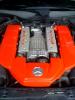
For those who don't know what catch can we have...I removed the K&N like filter on the top and tapped in a NPT to barb fitting on the top.
MBWorld Fanatic!
Ha. I even have the same can. Jaz products, about $60.00. So the two small lines, and the third large line are all plumbed into the side fittings with the top going to vac source? Looks good.
sales@eurocharged.com
SPONSOR
close
Today
- Join DateAug 2006
- LocationHouston
- Posts:4,909
-
iTrader Positive Feedback0
-
iTrader Feedback Score(0)
- Vehicle(s) I driveC63S
-
Likes:169
-
Liked:130 Times in 93 Posts
Quote:
Thanks! That's the can... The larger PCV line goes on one side of the can and the two smaller ones on the other. Kind of rigged right now, but it works.Originally Posted by NitrogenBalance
Ha. I even have the same can. Jaz products, about $60.00. So the two small lines, and the third large line are all plumbed into the side fittings with the top going to vac source? Looks good.


Quote:
The car is running good, but I still think it's down on power.
Originally Posted by AMG-Jerry
I'm now debating if I should remove the ported heads and try a set of stock heads to see the difference in power.The car is running good, but I still think it's down on power.
Well we are going back to the track so I say swap heads and see.
sales@eurocharged.com
SPONSOR
close
Today
- Join DateAug 2006
- LocationHouston
- Posts:4,909
-
iTrader Positive Feedback0
-
iTrader Feedback Score(0)
- Vehicle(s) I driveC63S
-
Likes:169
-
Liked:130 Times in 93 Posts
Quote:
Originally Posted by c32used
Well we are going back to the track so I say swap heads and see.
The soonest I could do it is X-mas.

Banned
I just plugged the Y-pipe, and capped the end of the line with a small filter. No idle problems. No driving problems. Noticeably less oil in the surge tanks. Hell, I was running the line just down to the ground. But I figured that wasn't PC lol.
sales@eurocharged.com
SPONSOR
close
Today
- Join DateAug 2006
- LocationHouston
- Posts:4,909
-
iTrader Positive Feedback0
-
iTrader Feedback Score(0)
- Vehicle(s) I driveC63S
-
Likes:169
-
Liked:130 Times in 93 Posts
Quote:
Originally Posted by code3smith
I just plugged the Y-pipe, and capped the end of the line with a small filter. No idle problems. No driving problems. Noticeably less oil in the surge tanks. Hell, I was running the line just down to the ground. But I figured that wasn't PC lol.
So, is your system open or closed now at the end? What about the T on the bottom of the S/C?
MBWorld Fanatic!
Quote:
Yeah, not the green approach by any means. I think this was called a "road draft" system and was used back in the day 50's 60's 70's? dunno as I was born in 82.... The lines would just run to the ground and the CC would dump gunk whenever it needed to. Venting it to atmosphere through a filter is just as unfriendly in bio terms. Not pointing fingers as my car is a pig. Originally Posted by code3smith
I just plugged the Y-pipe, and capped the end of the line with a small filter. No idle problems. No driving problems. Noticeably less oil in the surge tanks. Hell, I was running the line just down to the ground. But I figured that wasn't PC lol.
AMG-Jerry, you shouldn't have any smell in the cabin whatsoever. All those fumes and stuff end up going out the back of your exhuast or remain stuck to the interior of your combustion chambers. It's a double edge sword, prevent intake contamination, or keep your crankcase in check....however, the catch can should prevent much of the first.
I actually spent a couple weekends fabbing a bracket for the gzmotorsport vac pump. I was going to run it identical to the LS1 street system. My supercharger idler pully would have ran the pump using a small external cog belt. I was about an inch shy of clearance once the motor moves under load. That would have fixed both the intake contamination and the CC vacuum...oh well.

Banned
Quote:
Yes, that is what they did. For me it was a temporary solution until I bought a catch can. After seeing how much oil was collecting in the surge tanks, I figured this was the quick and easy way to patch the problem. I still have not fixed a leaky gasket on top of the valve cover on the driver side head anyway. Once I pull that all apart and take care of it, I will run a more PC setup Originally Posted by NitrogenBalance
Yeah, not the green approach by any means. I think this was called a "road draft" system and was used back in the day 50's 60's 70's? dunno as I was born in 82.... The lines would just run to the ground and the CC would dump gunk whenever it needed to. Venting it to atmosphere through a filter is just as unfriendly in bio terms. Not pointing fingers as my car is a pig.
 Needless to say, I still cant smell anything.
sales@eurocharged.com
SPONSOR
close
Today
- Join DateAug 2006
- LocationHouston
- Posts:4,909
-
iTrader Positive Feedback0
-
iTrader Feedback Score(0)
- Vehicle(s) I driveC63S
-
Likes:169
-
Liked:130 Times in 93 Posts
Here is the graph from today.
Bottle was only used once and was emtpy.
Bottle was only used once and was emtpy.


