Cali been having a blast with his M276 3.5NA approx 57,000 miles car today of year 2014..... having no more reduced oil pressure, with the oil solenoid which reduces the oil pressure, is now being defeated.
His VVT response is better , hence his engine throttle response improve too...after all the 4 VVT-s are the engine breathing and FART control
If his oil burn smell goes away, it seems the oil spray nozzle doing good work now ( not deactivated by oil solenoid ) and can spray enough fresh oil to the piston + cylinder wall liner to not
get burn.
I would like to recall Cali's concern about piston oil cooling, which will also STOP when and if the oil pressure solenoid is active to reduce oil pressure.
This oil pressure solenoid long discussion is here, the PART 1 : https://mbworld.org/forums/e-class-w...en-passed.html
.
Low level flow rate or solenoid activated to reduce flow and pressure is when engine is less than 3,500 - 3,550 RPM.
Yep, still a high RPM to be NOT getting oil cooling spray to piston underside..... 3,000 to 3500 RPM
.
.
Now, I was under the impression that OIL SPRAYER FOR COOLING THE PISTON UNDERSIDE is the accurate description of that component : Item #120 below
.
But when I took sometime to see how the oil spray pattern is, this IMPORTANT oil spray nozzle is an extension of piston and liner lubrication oil spray and not as simple as
cooling only.
If on M278, oil spray nozzles are here, as would be for all engines :
.
It so happened this M278 and M157 has affinity for scoring of the liner + piston at where the oil spray nozzle is at and the opposite side of the spray nozzle. If nozzle is at 12 o'clock and with scoring,
the 6 o'clock is also scored.
The above M278 is severe example of probably an overheated engine or whatnot, but M278 and M157, has great torque well below 3,500 RPM, just like my M276 3.0 TT.
.
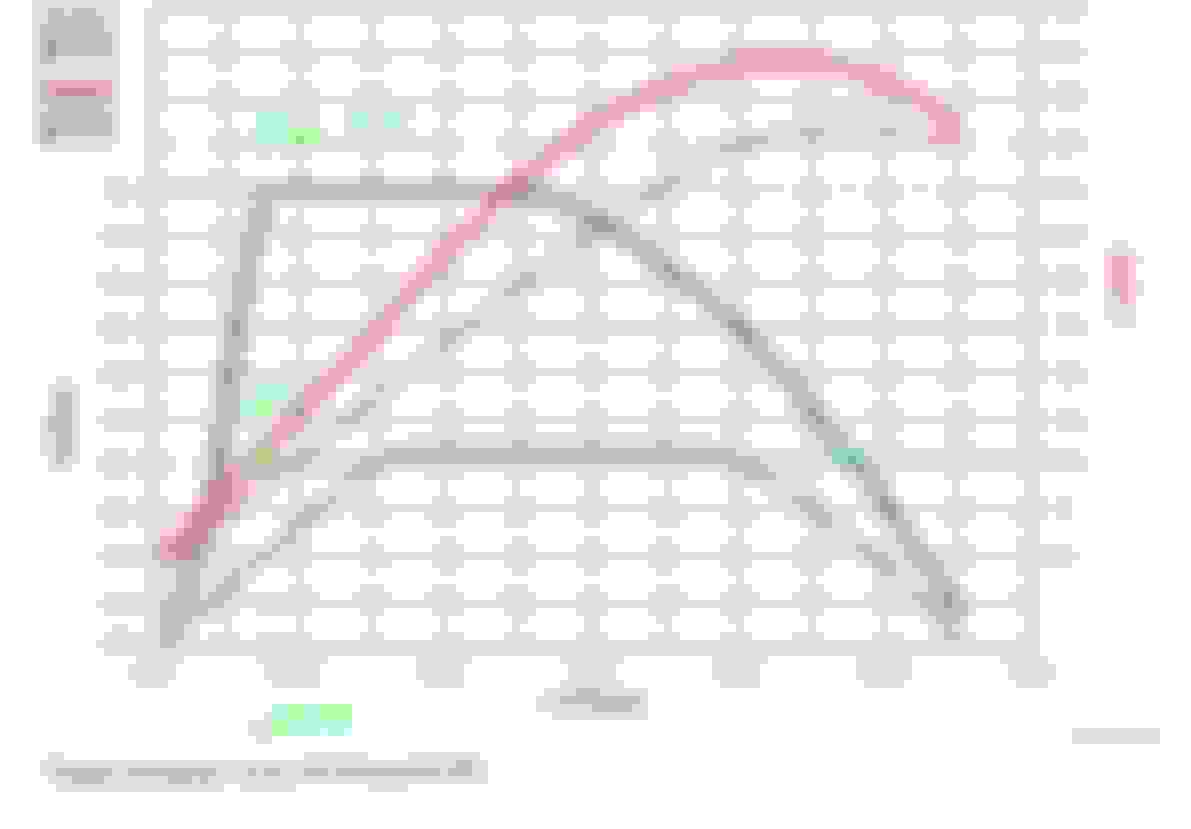
Damn, peak 700Nm of torque at only 1,800 RPM !!!
Mine, the M276 3.0 TT is peak 480 Nm at only 1,400 RPM...sweet.
.
What produces power for the engine ?
The freakin pressure the piston gets from combustion/explosion pushing down on the crankshaft to spin it.
So , looking at how stressful this pistons get merely at 1,400 - 1,800 RPM , and no oil spray nozzle cooling and directed lubrication spray by nozzle when oil solenoid is in LOW OIL PRESSURE MODE under 3,500 RPM,
in the name of VERY small fuel savings..... is indeed a crazy way of making engine life shorter. If fuel economy is the target, get a Prius and not an MB 300 - 430 HP engine V6 or V8, or better yet ....get a bicycle.
Without the oil spray nozzle, the piston underside only get the oil scoop/splash effect of the crankshaft counter weight and that crank webs digging into oil bath.
The cylinder wall liner upper region GETS nothing if oil spray nozzle does not get activated.
Must thanks Cali who reminded me of the oil spray nozzle. This baby pipe need its name to be upgraded to its true function.
"oil spray nozzle is an extension of piston and cylinder wall liner lubrication by oil spray method and not as simple as piston cooling only."
So, M276 3.5NA and M278 has piston travel distance ( stroke ) of 86 mm or 3.38 inch.
My M276 3.0 TT has 82mm or 3.23 inch piston travel distance ( stroke )
So this oil spray nozzle will do good oiling and cooling at least this height/distance of 3+ inches of the wall liner metal where it WILL get scrubbed by piston rings.
Less friction, and less heat too.... so noble a duty but disabled under 3,500 RPM.
What cause scoring in the first place, a piston skirt which expanded due to heat and start to scrub the cylinder liner wall, most probable cause.
If the piston top is broken or cracked, that is another story. Hence non turbo M276 3.5NA so far so good , but M278 and M157 if you seen enough Master Tasos video, you know
how many get scored piston + cylinder liner wall.... more so when engine get tuned. M276 3.0 TT , not enough population as now it is replaced by the inline 6,
3.0 Turbo M256 with that stupid 48Volt system. https://en.wikipedia.org/wiki/Mercedes-Benz_M256_engine
To those who doesn't know MB coolant gauge white-liar strategy and the preferred extra hot engine coolant strategy using its MAP based thermostat,
here is something I can show you.
This is how low the engine oil pressure is, and how hot MB like to make the coolant temperature to be. At 100.9C true coolant temperature, the analog
dial gauge would show you guys at best 90C - 93C. This is under 6 months old Mobil 1 0W40 , under 1,000 miles of use.
ABOVE LOG IS WITH OIL SOLENOID DEFEATED, SO THIS IS BEST OIL PRESSURE ACHIEVEABLE.
24.87 PSI at 924 RPM, albeit coolant temp at 100.9C or 213.6F
The engine oil temperature is not an immersed in oil temperature sensor, but a skin attached thermocouple on the oil pressure sensor tip metal skin.
When coolant this hot, and engine oil temperature get hot too, below 700 RPM, the engine oil pressure won't do better than 17 PSI.
My take on this save-some-fuel using reduced oil pressure strategy is not helping us engine owners to get the best longest life possible and maximum performance of our engines.
Sure 100K miles for polite , soft throttle individual is easy... but for guys who enjoy WOT redline and/or in hot countries, this is a curse
Thanks to Cali, I opened up my eyes wider towards the oil spray nozzle ACTUAL DUTY and goodness.
Master Surya, every topic in which you inject your intelligence is interesting seriously interesting!!
We've labored like dive-budies to transform our Mercedes into better cars.
> Lube vs. torque !
This is so big I didn't even realize the RPM below 3500 is where most stressful engine work is done. Hard working conditions made worse ....
Thank you for pointing out this evidence! 👏
Beside most commuters drive engine below 3500, not WOT on the payed freeway section
> Scoring opportunities:
I think you lead me to understand disymetrical cylinder squirting.
When the surface film between cylinder and piston is poor, cool8ng is poor, fruction is high because film coverage is marginal. One side of the piston gets hotter and more expanded by heat stress and starts grabing piston sideway with help of the torque forces pressing down on it.
It's like the side with higher friction can not travel at the same speed at the lubricated one, so piston tilts a little as it can not slide straight down !
Perhaps there are other phenomenon involved by virtue of the special piston coating... one thing we know is normal oiling prevents scoring.
> Fake misfires:
Piston that grab appear as "misfire" fault situation where ECU sees the cranksensor slow down associated with damaged cylinders.
Low compression from non-contributing cylinder does the exact same thing... it is the ultimate "misfiring" from ONE worned cylinder the engine RIP and the car with it.
Get cylinder inspected or do it yourself or get proper lube working before engine game is over.
✌️
> Normal pressure:
Thank you for a glance at what is physically happening inside the engine with defeated solenoid.
20psi ~ 850 rpm
We can guess squirting starts when it should so long solenoid is deactivated. By the time 1000rpm threshold is crossed pistons are showered with oil cooled by heat exchanger.
One thing I noticed is oil is cooler that coolant which would mean the heat exchanger is warming up oil... or your not WOT hard enough
> Piston squirters:
Some engine have two squirters per cylinder, ours has one and it's disable under most work conditions....WTFamazing
When oil pump output is low it means the engine is pumping very little power, little heat is produced. In that case to direct available oil to bearings the squirters are individually shut by a ball on spring near 20psi.
We understand the importance of cooling pistons
> Piston Blow-by game:
At this stage I can nearly bet the high crankcase pressure on low mileage engines is caused by defective piston oiling.
Burned oil carbon accumulation can not be cleaned without decent oil circulation - Poor oiling prematurely creates dirty old engine conditions that may be reversible.
It's one perfect vicious circle:
reduced oil pressure,
limited squirting,
less cooling,
more friction,
more heat,
more carbon,
more blow-by,
more intake oil
more dirty valves, lambda, cats...
So crankcase blow-by ends up screwing with the MAP reading in the intake plenum. TT and NA surely have different intake pressure profiles. These modern engines have done away with AirFlow measures replaced by intake Pressure sensor. This way they are better able to cope with multiple air sources affecting intake.
> Killer Heat:
As my ECU is learning new adaptation maps I noticed I have not smell coolant leak for a while. Just like burned oil smell... gone! I've had these old car leaky smell since new.
This killer heat was generated by piston cooling when ECU would cycle pressure back/forth. We knew that.
Now what else is linked to coolant temp is.... ATF Temp through radiator exchanger. By not having coolant temp peaks, the ATF temp stays regulated at a temp/pressure point TCU learns to work with. This has a potential not to cook countless delicate O-rings inside our tranny👏
> Mapped controls:
The engine control is in charge of managing a lot of engine functions many of which are variable and time sensitive. This means the ECU must run a lot of real-time calculations in parallel. Bosch tends to use the best in the world German electronics but there are limits to how many multi-core microcontrollers can be cramed inside an engine compartment enclosure. ASICS are developed to cut corners profitably.
In order to always succeed calculating every last piece of data in every cycle, the developers cheet using look up tables.
Tables guarantee to instantly provide approximated data for every combination:
Multi-pulsed ignition !
Multi-pulsed injections !
HPFP Timings!
VVT positionings
Thermostat opening vs. ECT
Shift calls vs. load
These adaptation tables are maintained to store the best historical data incrementaly. They get updated incrementally by tiny steps. So when we introduce radical changes, the ECU/TCU needs to relearn best behaviors gradually. It was noticeable with VVT gears steppings...
> JITTER... eats power:
Jitter detunes the engine and waste performance. We want to eliminate it as much as practical. Jitter unwanted data swings
The fastest way to introduce nasty jitter is to screw with timings. This performance weakness got introduced by oil pressure game.
Let's untangle that spaghetti together....
Recently I noticed my idle was radically captured, evenly smooth without any rpm variations up or down. The idle no longer butterflies around, it's just a nice flat vroooooom. That is a welcomed achievement this engine never had. Another thank you credit for MS!
limp tensioner
loose chain slack
limp VVT gear nearly locked
jittery camshafts positions timing!!
jittery HPFP lobes (x3 or x4)
pressure swings
crankshaft rpm butterflies!
This effect likely goes away in WOT near 200km/Hr...
It's harder to drive street blocks at partial throttle with jittery timings and inadequate mixture - The flip side is solid engine torque from 900.Rpm. Solid run just like the smooth idle, that's our incentive.
> Old friend... CAN-C burps
Have you noticed sometimes your idle hiccups or burps like 20sec to 30 sec ??
That's jitter from CAN-Bus C traffic jam.
That you don't want to much of either to mess up your manicured tables. The hiccup is a wake call to notice.
****** This Bosch injection is very capable of excellent linear performance if you don't upset it with jittery timings.
When upset it takes away fuel and with it power. You'll want to understand how to pet it for strong smooth output.
***********
This is such a better car to drive that I can't help to enjoying why that is.
Cali wrote : > Scoring opportunities:
I think you lead me to understand disymetrical cylinder squirting.
When the surface film between cylinder and piston is poor, cool8ng is poor, fruction is high because film coverage is marginal. One side of the piston gets hotter and more expanded by heat stress and starts grabing piston sideway with help of the torque forces pressing down on it.
===================
My mind then wonders to the known FAK-UP angle our pistons has to endure twice per 1 crankshaft revolution.
And also how would piston wrist pin get properly lubricated if by splash/scoop method of crankshaft, compared to a midl pressurized proper oil spray pipe aimed to piston underside cavity.
.
There is no way around this, a true straight line bore of the piston liner....in ideal world would be best the piston get pushed in and out by con-rod at at true zero degrees and not angled.
Of course there is no such thing, except when we use manual bicycle hand pump , that small pipe shaped pump...LOL
The diesel OM651 has 2 oil solenoids. One is the same name Y130 like ours, but I have not googled how it looks like....
What I want to show is, this engine has also a Y131 oil valve which is ...... see below :
Y131 - OIL SPRAY NOZZLE SHUT OFF VALVE
Since diesel RPM is lower than gasoline, I wonder at what RPM they deemed it is "safe" to kill flow to OIL SPRAY NOZZLE.
Diesel has higher compression, so it is hotter.......
My TV spies on me.... mountain in BALI !
How nice, now Artificial Inteligence closely profiles us.
Bosch came up with a better new way to control piston squirters with an ECU managed valve.
Our M276 sports the grandpa proven style ball-on-spring check-valve. It stays shut below 21Psi. This was done to preserve pressure when engine was idling with low power heat being generated.
Squirting involves a spray... yesterday you superbly described piston squirters. Thank you !!
We clearly understand it's impossible to reach pistons with a low pressure spray.
The question becomes:
-- Why on earth would we need to gate piston spray differently ???
-- The only reason is to only squirt at higher pressure, meaning higher RPM, right?
Controlling piston squirters separately creates the opportunity to lube the camshafts and cool the heads with normal pressure without the pistons/cylinders managed at a different clip.
I want to hope the ECU switches oil solenoids nased on a physical sensor such as:
retail pricing 99¢ sensor
Who knows exactly how the ECU logic is coded to work - We need hard data to describe reality!
We dont know if these ECU rely on oil sensors or replace true pressure by free lookup tables.
At last modern diesel get an arbitrary have a seemingly random chance not to last. A few freeway commuters still manage to rope in decent Miles: P06DD solenoid failure??
WHY so much hair splitting when we know what engines really need - Are those valves actuated until game-over time rings?
More engine to test - I think we know which way this is biased.
First, thank you for sharing all of this information, data and research with all of us!!
I have read every post and thread you gents have made about this dual-stage pump and I am 99 percent convinced it is the right thing to do.
I’ve been speaking about this with someone I think to be knowledgeable about engines and the m276 in particular. Something they mentioned as a potential concern would be this scenario:
Cold start, the oil at its most viscous, with low pressure eliminated and the cold, thick oil getting sprayed up in the cylinders via the “squirters” and up to the head at greater pressure.
the concern being that because the oil is so viscous, it could get stuck in the head until it’s heated up- starving the bottom end.
what do you make of this idea?
I run 5w-40 LM in a fairly cold but rarely below 25 deg F climate in Virginia, not sure exactly how my oil/environment would react but given the knowledge you both had - figured it can’t hurt to ask those who know!
I don't have winter, 25C/77F is as cold as I can get usually, or 18C/ 64F if I go to the mountain area.
Now, MB oil management, actually during cold start ( my 25C/77F or 32C/89F ) of the day, allows approx 35 seconds of normal or non-reduced oil pressure.
I believe this will apply for every cold start, even in your 25F/-4C temperature.
Take a look at this video, This is untouched wiring for oil solenoid, meaning it operates the way MB want it to be at 31C / 87.9F and the cold start of the day.
See how the oil pressure goes up to 60ish PSI at 1,200ish RPM within 5ish seconds.
Engine start at 4th second, oil pressure 60ish PSI at 9th second.....and all the way to 39th video second.
At 40th video second, only then MB/ECM commanded oil solenoid to work/ON to reduce pressure. That is DMM duty cycle 80% or higher and RPM has gone down to 900ish.
The duty cycle meter at 10% ish means the oil solenoid which is the oil pressure reducer is NOT active. Duty cycle 50% or higher means oil solenoid is active.
This solenoid as explained in part 1 thread , is a normally open solenoid for safety reason, so when no power applied to it, it means MB wants oil pressure to go up.
If the solenoid failed, you then get normal oil pressure performance, which is good high pressure all the time like the good old days before emission crazy rules.
If you want to know the MB algo setting, get a DMM with duty cycle and probed the 2 wires of the oil solenoid.
See at such cold 25F of your region, what does it do ? Is it like mine at warmer temperature ?
===============
This is 71C / 160F coolant temperature warm start, also untouched oil solenoid wiring, as is .
See that immediately after engine start, duty cycle of DMM goes to 93% ish and that means MB wants the oil pressure to NOT go NORMAL high.
Here I get 27PSI at 600 ish RPM. When a coolant temperature itself is still only 71C/160F mind you, the oil temperature itself would be at only 55C / 131 F very likely.
Go to the end of the video and you will see coolant temperature at HONEST 96C / 205F and oil pressure goes down due to heat, to 18PSI.
At this time of the test in Aug 2022, I have not yet install a thermocouple sensor to read engine oil temperature via skin of the oil pressure sensor.
Now I have engine oil temperature already.
Here is coolant temperature rise vs engine oil temperature rise, from COLD start, my 30-32C kind of cold start . July 2023 data.
This is from hotel to fuel station, short 10.x minutes engine running. Slow speed. I was in Surabaya city.
Yes, my oil solenoid has been disabled for the data log.
.
Be aware that Tranny fluid takes a long time and drive to warm it up. Minimum is like 4KM or more to get to good 70C/158F.
See below, tranny fluid did not even touch 45C /113F yet when I kill engine at fuel station 10.x minutes after engine running and super slow driving.
See how the oil pressure goes up to 60ish PSI at 1,200ish RPM within 5ish seconds.
Engine start at 4th second, oil pressure 60ish PSI at 9th second.....and all the way to 39th video second.
At 40th video second, only then MB/ECM commanded oil solenoid to work/ON to reduce pressure. That is DMM duty cycle 80% or higher and RPM has gone down to 900ish.
The duty cycle meter at 10% ish means the oil solenoid which is the oil pressure reducer is NOT active. Duty cycle 50% or higher means oil solenoid is active.
This solenoid as explained in part 1 thread , is a normally open solenoid for safety reason, so when no power applied to it, it means MB wants oil pressure to go up.
Thank you for such a detailed response and reference material. I have watched what you shared and upon looking at the data you have collected, it certainly looks like unplugging my solenoid has negligible, if any, effect on cold start and is as I had hoped/expected a good move to make! I’ll give it a try this week!
First, thank you for sharing all of this information, data and research with all of us!!
I have read every post and thread you gents have made about this dual-stage pump and I am 99 percent convinced it is the right thing to do.
I’ve been speaking about this with someone I think to be knowledgeable about engines and the m276 in particular. Something they mentioned as a potential concern would be this scenario:
Cold start, the oil at its most viscous, with low pressure eliminated and the cold, thick oil getting sprayed up in the cylinders via the “squirters” and up to the head at greater pressure.
the concern being that because the oil is so viscous, it could get stuck in the head until it’s heated up- starving the bottom end.
what do you make of this idea?
I run 5w-40 LM in a fairly cold but rarely below 25 deg F climate in Virginia, not sure exactly how my oil/environment would react but given the knowledge you both had - figured it can’t hurt to ask those who know!
you know the owner booklet provided with these new cars states you should adapt your engine oil viscosity for your local winter /summer.
You have a good point. Engine oils are like tires. All season tires are not the best in rain, heat or cold. 5w40 is not as good as 0W40 or 10W50 based on temperatures!
You may want to complete a study with own extended set of criteria ... The original study was done for mild oceanic climates. You know if your car is garaged and you have 5W40 in winter and let the ECU warm up the engine with elevated RPM routine: you'd be good!
serious chill
I have been in Fairbanks Alaska in January... the cars out there are left alone idling in the grocery parking lots and at the movie theaters... it is unbelievably amazing to witness that!
At home cars are either garaged or plugged in with a block/battery warmer to prevent freeze damage. Yeah, cold oil can be an issue!!!
You know you've got options, the best one is to trust Mercedes-Bosch legendary engineering.
If you feel like experimenting unchartered frontiers you can wire up a manual control but I don't recommend anyone temper with ECU controls... the reason is simple:
The cheap pump control valve is proven to get jammed with debris that directly waste terminate the engine RIP. Don't let that happen.
The smartest path is to rig your engine with a pressure sensor to monitor AND DRIVE ALARM WARNING for low pressure.
Everything is a calculated risk. Only you know your set of specifics...
Don't go diving with a heart condition!
Don't stress an unbalanced engine!
Be curious and your journey with be filled with learning experiences.
🤞
I'm bringing this thread back to the top of the W212 sub forum as I think both Part 1 and Part 2 should be Required Reading for just about anyone owning one of the gasoline powered W212s!!!
THANK YOU @CaliBenzDriver and @S-Prihadi for all the work you've done to bring to light this ticking time bomb in our engines! I have read numerous threads you both have contributed to (man are there a ton of posts in AMG land...!). I just did the unplug on the stupid oil pressure reducer solenoid this morning (42K on ODO) - I will drive the car tomorrow and we have a long trip next week (to say my Wife is not pleased with me making a last minute change, is putting it mildly: "what, so now you think your forum guys are smarter than MB and you're gonna unplug stuff?!") - well yup, I do and yes I am...
My story that led me to your fine work: We love, love, love our E550 (M278), but I wanted a bit "more" so I bought some tunes and had a custom one done for about 3/4 of what a Stage 1 tune would produce. I had a fresh oil change with Quaker State Euro 5W 40 and applied my "light" tune (it was fun ), but after less than 1300 miles the oil had turned quite dark - so I removed the tune and did an oil change, thinking I hate QS Euro oil! I had read a couple of years ago about the cylinder scoring and thought I need to find the absolute best oil I can...
Then I came across one of many threads you two put so much effort into and with a headslap with the whole "no oil squirting the pistons until they are Way Hot" from I think @CaliBenzDriver causing burnt oil and all else - crap on a tuned engine - I was killing the poor thing!!! No wonder the oil went dark! (sure hope I didn't hurt the M278...)
I want to thank you both again and I sure wish these two threads could be stickied up at the top, and slung far and wide among MB enthusiasts!
I imagine my Wife will get over it once we have an uneventful vacation...
You should have no problem unplugging the solenoid. Mine have been unplugged since last November (2023) and thousands of miles. I have a Stage 2 tune on my M276 SL400 that significantly improved when I unplugged it the solenoid and got excellent oil pressure as low as 1200 rpm instead of waiting for 3500 rpm. Prior to unplugging, I had to stick with a Stage 1 tune because of poor drivability with the Stage 2 tune. Now the Stage 2 is as smooth as factory.
You should have no problem unplugging the solenoid. Mine have been unplugged since last November (2023) and thousands of miles. I have a Stage 2 tune on my M276 SL400 that significantly improved when I unplugged it the solenoid and got excellent oil pressure as low as 1200 rpm instead of waiting for 3500 rpm. Prior to unplugging, I had to stick with a Stage 1 tune because of poor drivability with the Stage 2 tune. Now the Stage 2 is as smooth as factory.
Thank you - you were one of the many posters that I read across forums and threads on this solenoid unplugging! It was more work to remove and reinstall the underside access panel than to unplug the solenoid! (well it didn't want to come out without a pair of channel locks, but nothing broke). I need to go find the thread (maybe up in AMG?) that was sort of a survey on those that have unplugged...
I think you've made a good choice to get your M278 to run well.
Soon the laggy throttle will gradually improve to become more responsive.
With better oil circulation, your heads and HPFP will become quieter and much cooler.
Yet the MOD-2.0:5w40 experiment is NOT "unPlug-n-Play"!!!
The existing ECU/TCU maps are going to be mismatched until relearned because the engine has changed and it keeps improving as it's given a chance to seal compressions.
So that means the driving experience will appear a bit like a mixed bag with TCU confusion due to throttle changes.
Give your engine pistons time (mileage) to cleanup and ECU/TCU time to match. You'll definitely notice gradual torque improvements and heat reduction according to your choice of oil viscosity.
> SLOW WINS THE RACE...
-- It took years to build up carboned ring deposits, it will take time to reverse that...
-- Personally I would not rush ahead to use a 5W50-SP on drafty pistons. Let the self-cleaning operate such that not too much junk plugs the oil filter or washes lub away from seasoned surfaces.
-- I think appreciation has a lot to do with expectations. Readlining unbalanced engines is a recipe for desaster. Once you understand what's happening, patience comes for free.
The overall experience of canceling limited oiling is the ticket to engine longevity and balanced cylinders timings.
+++ MOD is not about solenoid...
Engines crippled with limited oil pressure benefit using better oil grade than stock.
Better oil viscosity provide advantages for normal heat removal and stable VVT timings.
HI All- Thank you for al the in depth info- there is a lot to digest from some very smart minds !
I have a 516 box van camper here in OZ with OM651 I have trolled and trolled and come to the conclusion that Unplugged = fail safe mode and allows full oil pressure to rotating assembly and critical parts including piston cooling jets Is this correct ? this will also log faults but not activate Engine light
I would appreciate a reply from one of the Tech Gurus on here to releve my blood presure hhaha
I will post this generic reply on a couple of sections in hope it Pings someones inbox and a reply is forthcoming - Apologies for multiple replies if everyone on the thread gets pinged in the inbox many thanks Jess
HI All- Thank you for al the in depth info- there is a lot to digest from some very smart minds !
I have a 516 box van camper here in OZ with OM651 I have trolled and trolled and come to the conclusion that Unplugged = fail safe mode and allows full oil pressure to rotating assembly and critical parts including piston cooling jets Is this correct ? this will also log faults but not activate Engine light
I would appreciate a reply from one of the Tech Gurus on here to releve my blood presure hhaha
I will post this generic reply on a couple of sections in hope it Pings someones inbox and a reply is forthcoming - Apologies for multiple replies if everyone on the thread gets pinged in the inbox many thanks Jess
Jess, I’ll respond here too since you have asked in a few threads.
Some recent developments to be aware of. Mercedes is now updating their coding in EVEN their older cars. Currently and in the future, when you bypass the critical design element of the oil pressure control solenoid in the engineered function of the MB oiling and VVT system. It will NOW trigger a code and can no longer be bypassed. That is a newer development at least here in the US and Europe. If you’ve been to the dealership lately, it’s possible you may have the updated ECM firmware.
Bypassing parts of engineered functionality of the oiling system will NOT prevent Bore Scoring!
The myth that the tiny stream of oil, aimed specifically at the underside of the piston crown, in order to cool the cylinder charge, somehow will magically prevent bore scoring has been de-bunked and lost in the mess of a thread. It does not and will not. If this was even an engineering consideration, the oil squirters would be pointed at the thrust side of the cylinder bore/piston.
There is mounting evidence disconnecting the oil pressure solenoid, may do more harm than good at this point. Lower tensioners may be wearing at an accelerated rate. https://mbworld.org/forums/w212-amg/...ml#post9200847
Hi @crconsulting
thanks so much for the quick reply with indepth
attention- I hope I didn’t get upgraded to that software version hey mate
without questioning the logic or previous experience that led you to the points raised in your reply - what are your thought on the part number mentioned above A001 990 53 17
it seems Mercedes has some genuine concerns at least for the OM651 engine with the issuing of a genuine blanking plate for an entire solenoid delete
without questioning the logic or previous experience that led you to the points raised in your reply
Those questions and logic are EXACTLY what you need to ask in order to make informed decision for yourself. Pro’s and Con’s, NO?
Quote:
Originally Posted by ausboxvan516
it seems Mercedes has some genuine concerns at least for the OM651 engine with the issuing of a genuine blanking plate for an entire solenoid delete
So let me get this right, because someone in Russia who services high mileage Taxi cabs in the sub zero climate, found an obscure part in the EPC for a specific application. (because that seems to be where this viral trend originated)
The tea leaves read that Mercedes has somehow “genuine concerns” about its integrated VVT oiling system design in millions and millions of engines. Yet, countless have managed to make it to the 300-400k mile range without any modifications. (Just look at a site like Autotrader)
Go right ahead and post that official statement/TSB from MB
In the mean time,
What I can tell you is you are right, MB does have genuine concerns, but it’s about people altering the engineering designs of their engines, and now is taking steps to remedy those concerns by rolling out new firmware. Also the old recirculated TSB about unplugging are no longer valid. MB’s official position is now to repair the oil pressure solenoid.
In the end it comes down to this: It’s your car you can do what you want to it.
But let’s no perpetuate false claims.
Yep, It was made for certain markets from the factory (early years when it was Euro 4) later years with Euro 5 had the solenoid. I can't confirm but I do wonder if the Taxis in Europe had a similar trim without this across more years
Recap, OM651 was introduced in/around 2007 before Euro 5 started in 2009
In the mean time,
What I can tell you is you are right, MB does have genuine concerns, but it’s about people altering the engineering designs of their engines, and now is taking steps to remedy those concerns by rolling out new firmware. Also the old recirculated TSB about unplugging are no longer valid. MB’s official position is now to repair the oil pressure solenoid.
The one for the M274? Validity means just that. What engine are we talking about here? Is the persons CE light on or is this PRE-EMPTIVE? Sounds like they are concerned about piston scoring. This modification has NO EFFECT ON PISTON SCORING.
Also the fact that MB now updates their ECM in order to stop bypassing the oil pressure solenoid should tell you something, no?
This is MB’s official position, like it or not they are working to remedy this viral phenomenon.
Also It’s not like once TSB’s are released, they can can recalled. They just keep proliferating throughout the internet. The NHTSA site has all TSB’s listed current or not.
I have heard of a newer TSB release, but haven’t seen it either. It could come at a later date as MB is notoriously slow in releasing these as much of the data is generated in the field, from feedback at the service level.
It’s also worth mentioning, I CAN NO LONGER FIND THE SUPERSEDED, ABOVE MENTIONED, TSB ON THE MB’s PORTAL.
I’ve posted enough on this subject here.
It’s your car, go right ahead and unplug. Nobody cares.
You’re only talking yourself into it.
Let’s just not perpetuate false engineering claims….
thanks so much for the quick reply with indepth
attention- I hope I didn’t get upgraded to that software version hey mate
without questioning the logic or previous experience that led you to the points raised in your reply - what are your thought on the part number mentioned above A001 990 53 17
it seems Mercedes has some genuine concerns at least for the OM651 engine with the issuing of a genuine blanking plate for an entire solenoid delete
anyone else have any experience with this part
thanks all
Jess In Oz
🤙🏻
@ausboxvan516
No question you're not alone enjoying great Mercedes.
There is no evidence that oil pressure solenoid bypass helps to avoid bore scoring but I assume that it does help a lot.
Probably the bores are not weak but piston and bore cooling and lubrication is just so bad. I may not right.
There is also no evidence that solenoid bypass does not help. Eco god not good.
Slideshow: A one-of-one U.S.-spec Mercedes-Benz SLR McLaren Roadster became even rarer after a factory-backed transformation at McLaren's headquarters.







 :
:









































 - so I removed the tune and did an oil change, thinking I hate QS Euro oil! I had read a couple of years ago about the cylinder scoring and thought I need to find the absolute best oil I can...
 with the whole "no oil squirting the pistons until they are Way Hot" from I think @CaliBenzDriver causing burnt oil and all else - crap on a tuned engine - I was killing the poor thing!!! No wonder the oil went dark! (sure hope I didn't hurt the M278...)